

Home

Innate immune response and Th1 inflammation

The innate immune response is the body's first line of defense against and non-specific way for responding to bacterial pathogens.1) Located in the nucleus of a variety of cells, the Vitamin D nuclear receptor (VDR) plays a crucial, often under-appreciated, role in the innate immune response.

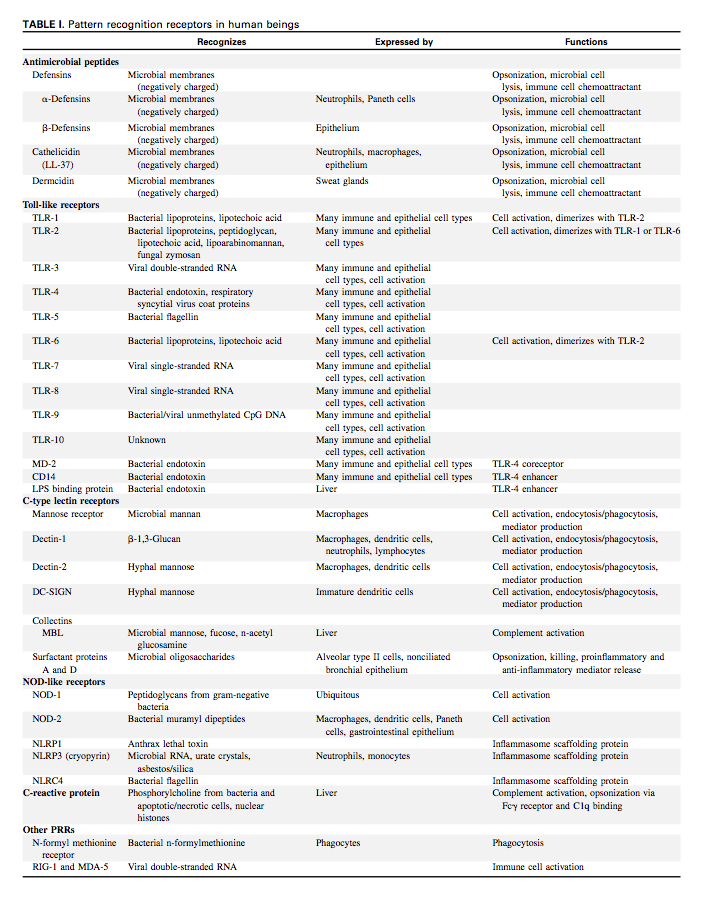
When functioning properly, the VDR transcribes thousands of genes2) including those for the proteins known as the antimicrobial peptidesBody’s naturally produced broad-spectrum antibacterials which target pathogens.. Antimicrobial peptides are “the body's natural antibiotics,” crucial for both prevention and clearance of infection.3) The VDR also expresses the TLR2a receptor which is expressed on the surface of certain cells and recognizes native or foreign substances and passes on appropriate signals to the cell and/or the nervous system. receptor, which is expressed on the surface of certain cells and recognizes foreign substances.

The body controls activity of the VDR through regulation of the vitamin D metabolites. 25-hydroxyvitamin DThe vitamin D metabolite widely (and erroneously) considered best indicator of vitamin D "deficiency." Inactivates the Vitamin D Nuclear Receptor. Produced by hydroxylation of vitamin D3 in the liver. (25-DThe vitamin D metabolite widely (and erroneously) considered best indicator of vitamin D "deficiency." Inactivates the Vitamin D Nuclear Receptor. Produced by hydroxylation of vitamin D3 in the liver. ) antagonizes or inactivates the Receptor while 1,25-dihydroxyvitamin DPrimary biologically active vitamin D hormone. Activates the vitamin D nuclear receptor. Produced by hydroxylation of 25-D. Also known as 1,25-dihydroxycholecalciferol, 1,25-hydroxyvitamin D and calcitirol. (1,25-DPrimary biologically active vitamin D hormone. Activates the vitamin D nuclear receptor. Produced by hydroxylation of 25-D. Also known as 1,25-dihydroxycholecalciferol, 1,25-hydroxyvitamin D and calcitirol.) agonizes or activates the Receptor.

Another component of the innate immune response is the release of inflammatory cytokines. The result is what medicine calls inflammation, which generally leads to an increase in symptoms.

Before the Human Microbiome Project, scientists couldn't link bacteria to inflammatory diseases. But with the advent of DNA sequencing technology, scientists have detected many of the bacteria capable of generating an inflammatory response. All diseases of unknown etiology are inflammatory diseases.

Greater than 36 types of tissue have been identified as having a Vitamin D Receptor.4)

Nuclear receptors and ligands

Nuclear receptors are a class of proteins found within the interior of cells that are responsible for sensing the presence of hormones and certain other molecules. A unique property of nuclear receptors which differentiate them from other classes of receptors is their ability to directly interact with and control the expression of genomic DNA. Some of the molecules (or ligands) which bind the nuclear receptor activate (agonize) it and some inactivate (antagonize) it.

It is commonly accepted that most ligands, approximately 95% to 98%, inactivate the nuclear receptors. Since the nuclear receptors play a significant role in the immune response, this factor alone may explain why so many drugs and substances found in food and drink are immunosuppressive.

Because the expression of a large number of genes is regulated by nuclear receptors, ligands that activate these receptors can have profound effects on the organism. Many of these regulated genes are associated with various diseases which explains why the molecular targets of approximately 13% of FDA approved drugs are nuclear receptors.5)

Different cell types have different nuclear receptors. One of the nuclear receptors seen in immune cells is the Vitamin D Receptor (VDR). The VDR has two endogenous or “native” ligands, which are also the two main forms of vitamin D in the human body: 25-hydroxyvitamin D (25-D) and 1,25-dihydroxyvitamin D (1,25-D). Non-native or exogenous ligands can also inactivate or activate a nuclear receptor, depending on its molecular structure.

Ligands compete to dock at nuclear receptors. When is a given kind of ligand such as 25-D as opposed to 1,25-D more likely to bind to the VDR? It depends. 1,25-D tends to be much less common than 25-D – by a factor of 1,000 or more – so it binds to the receptor much more infrequently. A greater concentration of a given molecule can displace competing molecules off the nuclear receptor. Affinity occurs in logarithmic fashion, which is to say that it operates on the basis of a sliding scale. In short, an increase in 1,25-D and a decrease in 25-D can tilt the odds in favor of 1,25-D, and vise versa.

Affinity as well as the question of whether a ligand inactivates or activates a nuclear receptor can all be validated using in silicoExperiment technique performed on computer or via computer emulation. modeling. Although less precise, it is also possible to measure these properties in vitroA technique of performing a given procedure in a controlled environment outside of a living organism - usually a laboratory..

Activated by 1,25-D and inactivated by 25-D, the Vitamin D nuclear receptor (VDR) transcribes a number of genes crucial to the function of the innate immune response.

Role of Vitamin D Receptor in innate immunity

When activated by 1,25-D, the Vitamin D Receptor (also called the calcitriol receptor) transcribes thousands of genes.6) It is commonly known that the VDR functions in regulating calcium metabolism.7) It is becoming increasingly clear, however, that the clinically accepted role of the Vitamin D metabolites, that of regulating calcium homeostasis, is just a small subset of the functions actually performed by these hormones.

Transcription of antimicrobial peptides

The VDR transcribes antimicrobial peptides (AMPs).8) 9) The AMPs, of which there are hundreds, are families of proteins, which have been called “the body's natural antibiotics,” crucial for both prevention and clearance of infection. AMPs are broad-spectrum, responding to pathogens in a non-specific manner.10)

AMPs have been documented to kill bacteria and disrupt their function through the following modes of action:

  • interfering with metabolism
  • targeting cytoplasmic components
  • disrupting membranes
  • act as chemokines and/or induce chemokine production, which directs traffic of bacteria

Also, AMPs aid in recovery from infection by:

  • promoting wound healing
  • inhibiting inflammation

In many cases, the exact mechanism by which antimicrobial peptides kill bacteria is unknown. In contrast to many conventional antibiotics including those used by the Marshall ProtocolA curative medical treatment for chronic inflammatory disease. Based on the Marshall Pathogenesis., AMPs appear to be bacteriocidal (a killer of bacteria) instead of bacteriostatic (an inhibitor of bacterial growth).

Two of the more significant families of AmPs are cathelicidin Family of antimicrobial peptides found primarily in immune cells and transcribed by the Vitamin D Receptor. and the beta-defensins. Of these two families, cathelicidin is the most common.

Other antimicrobial activity of the VDR

Additionally, when the VDR is activated, TLR2 is expressed.11) TLR2 is a receptor, which is expressed on the surface of certain cells and recognizes native or foreign substances, and passes on appropriate signals to the cell and/or the nervous system.

When activate TLR2 allows the immune system to recognize gram-positive bacteria, including Staphylococcus aureus12)13) Chlamydia pneumoniae14) and Mycoplasma pneumoniae.15)

Th1 inflammation

Another component of the innate immune response is inflammation. The identification of bacteria and other pathogens triggers the release of inflammatory cytokines. These cytokines include interferon-gamma, tumor necrosis factor-alpha (TNF-alpha), and Nuclear Factor-kappa B (NF-kappaB). Cytokines are regulatory proteins, such as the interleukins and lymphokines, that are released by cells of the immune system and act as intercellular mediators in the generation of an immune response. The result is what medicine calls inflammation, which generally leads to an increase in symptoms.

According to the Marshall PathogenesisA description for how chronic inflammatory diseases originate and develop., any activity of the Th2 cytokines in chronic disease is a result of the primary Th1-inducing pathogens.

All Th1 diseases are marked by an inflammatory response

Before the Human Microbiome Project, scientists couldn't link bacteria to inflammatory diseases. But with the advent of DNA sequencing technology, scientists have detected many of the bacteria capable of generating an inflammatory response. All diseases of unknown etiology are inflammatory diseases.

An inflammatory immune response—one of the body’s primary means to protect against infection—defines multiple established infectious causes of chronic diseases, including some cancers. Inflammation also drives many chronic conditions that are still classified as (noninfectious) autoimmuneA condition or disease thought to arise from an overactive immune response of the body against substances and tissues normally present in the body or immune-mediated (e.g., systemic lupus erythematosus, rheumatoid arthritis, Crohn’s disease). Both [the innate and adaptive immune systems] play critical roles in the pathogenesis of these inflammatory syndromes. Therefore, inflammation is a clear potential link between infectious agents and chronic diseases.

Siobhán M. O'Connor et al. 16)

Many palliative therapies interfere with inflammation

While inflammation is associated with disease, inflammation often serves an invaluable role as the immune system fights off chronic pathogens. Numerous medications artificially suppress inflammation including anti-TNF drugsDrugs which interfere with the body's production of TNF-alpha - a cytokine necessary for recovery from infection, interferon, corticosteroidsA first-line treatment for a number of diseases. Corticosteroids work by slowing the innate immune response. This provides some patients with temporary symptom palliation but exacerbates the disease over the long-term by allowing chronic pathogens to proliferate., antifungals, and anti-pyreutics. While interfering with the inflammatory response typically reduces immunopathologyA temporary increase in disease symptoms experienced by Marshall Protocol patients that results from the release of cytokines and endotoxins as disease-causing bacteria are killed. and makes a patient feel less symptomatic in the near term, doing so allows the bacteria which cause chronic disease to proliferate.

The release of cytokines appears to be essential for recovery after an infection. One study found that the cytokine TNF-alpha – which is blocked by anti-TNF drugs – is necessary for the proper expression of acquired specific resistance following infection with Mycobacterium tuberculosis.17) 18) 19) Another effect of the use of TNF blockers is to break or reduce the formation of granuloma, one of the body's mechanisms to control bacterial pathogens.20)

Read more:

Notes and comments

TECHEDIT

  • Legacy content
    • e92:

Plasma cytokine fluctuations over time in healthy controls and patients with fibromyalgia.

Togo F, Natelson BH, Adler GK, Ottenweller JE, Goldenberg DL, Struzik ZR, Yamamoto Y.

Pain & Fatigue Study Center, Department of Neurosciences, UMDNJ-New Jersey Medical School, 1618 ADMC, 30 Bergen Street, Newark, NJ 07103, USA.

We examined the pattern of cytokine secretion across the 24-hr day for women with widespread pain and tenderness having the diagnosis of fibromyalgia (FM) and matched healthy controls. Subjects were given time to habituate to being in a clinical research laboratory environment and then were sampled for cytokines without their being disturbed for a 24-hr period including an 8-hr sleep period. Cytokine levels were uniformly low but characterized by bursts of secretion. Bursting occurred either in singlets or in doublets with a range from 88 to 131 mins between doublet bursts. There was an element of synchronization of these bursts with most occurring at the beginning of sampling. FM patients showed a shift to increased IL-10 in the nighttime compared to controls. The relation between this anti-inflammatory cytokine to the pro-inflammatory cytokines studied also differed between groups: FM patients showed an increased ratio of IL-10 burst amplitude to that of pro-inflammatory cytokines IL-1beta, IL-8, and TNF-alpha. We interpret this to indicate a skew away from the normal balance favoring pro-inflammatory cytokines in controls toward one favoring an anti-inflammatory response in FM. These changes toward anti-inflammatory predominance in FM may explain their common complaint of disturbed sleep because these cytokines are known to disrupt sleep.

PMID: 19064941 [PubMed - indexed for MEDLINE]

References

2) , 6) Wang TT, Tavera-Mendoza LE, Laperriere D, Libby E, MacLeod NB, Nagai Y, Bourdeau V, Konstorum A, Lallemant B, Zhang R, Mader S, White JH Large-scale in silico and microarray-based identification of direct 1,25-dihydroxyvitamin D3 target genes. Mol Endocrinol. 2005;19:2685-95.
3) , 10) Zasloff M Antimicrobial peptides of multicellular organisms. Nature. 2002;415:389-95.
5) Overington JP, Al-Lazikani B, Hopkins AL How many drug targets are there? Nat Rev Drug Discov. 2006;5:993-6.
7) Li YC, Bolt MJ, Cao LP, Sitrin MD Effects of vitamin D receptor inactivation on the expression of calbindins and calcium metabolism. Am J Physiol Endocrinol Metab. 2001;281:E558-64.
8) Wang TT, Nestel FP, Bourdeau V, Nagai Y, Wang Q, Liao J, Tavera-Mendoza L, Lin R, Hanrahan JW, Mader S, White JH Cutting edge: 1,25-dihydroxyvitamin D3 is a direct inducer of antimicrobial peptide gene expression. J Immunol. 2004;173:2909-12.
11) Schauber J, Dorschner RA, Coda AB, Büchau AS, Liu PT, Kiken D, Helfrich YR, Kang S, Elalieh HZ, Steinmeyer A, Zügel U, Bikle DD, Modlin RL, Gallo RL Injury enhances TLR2 function and antimicrobial peptide expression through a vitamin D-dependent mechanism. J Clin Invest. 2007;117:803-11.
13) González-Zorn B, Senna JP, Fiette L, Shorte S, Testard A, Chignard M, Courvalin P, Grillot-Courvalin C Bacterial and host factors implicated in nasal carriage of methicillin-resistant Staphylococcus aureus in mice. Infect Immun. 2005;73:1847-51.
14) Cao F, Castrillo A, Tontonoz P, Re F, Byrne GI Chlamydia pneumoniae--induced macrophage foam cell formation is mediated by Toll-like receptor 2. Infect Immun. 2007;75:753-9.
15) Chu HW, Jeyaseelan S, Rino JG, Voelker DR, Wexler RB, Campbell K, Harbeck RJ, Martin RJ TLR2 signaling is critical for Mycoplasma pneumoniae-induced airway mucin expression. J Immunol. 2005;174:5713-9.
16) O'Connor SM, Taylor CE, Hughes JM Emerging infectious determinants of chronic diseases. Emerg Infect Dis. 2006;12:1051-7.
17) Allie N, Alexopoulou L, Quesniaux VJ, Fick L, Kranidioti K, Kollias G, Ryffel B, Jacobs M Protective role of membrane tumour necrosis factor in the host's resistance to mycobacterial infection. Immunology. 2008;125:522-34.
18) Arend SM, Breedveld FC, van Dissel JT TNF-alpha blockade and tuberculosis: better look before you leap. Neth J Med. 2003;61:111-9.
19) Islam N, Kanost AR, Teixeira L, Johnson J, Hejal R, Aung H, Wilkinson RJ, Hirsch CS, Toossi Z Role of cellular activation and tumor necrosis factor-alpha in the early expression of Mycobacterium tuberculosis 85B mRNA in human alveolar macrophages. J Infect Dis. 2004;190:341-51.
home/pathogenesis/innate_immunity.txt · Last modified: 01.29.2010 (external edit)
© 2010, Autoimmunity Research Foundation. All Rights Reserved.