. Outcome in sarcoidosis. The relationship of relapse to corticosteroid therapy. Chest. 1997 Mar;111(3):623-31. doi: 10.1378/chest.111.3.623.
[PMID: 9118698] [DOI: 10.1378/chest.111.3.623]
Related article: Immune Suppression



Related article: Immune Suppression
Many first-line treatments for chronic disease were developed before it was understood that the death of chronic bacteria necessarily results in an immunopathological response and temporary feelings of malaise. Such treatments are designed to slow the immune response under the mistaken premise that autoimmune disease results when the immune system attacks the body.
According to the Marshall Pathogenesis, bacteria drive chronic disease, and treatments that slow the immune system only appear to “work” because they decrease bacterial death. While this causes a drop in inflammationThe complex biological response of vascular tissues to harmful stimuli such as pathogens or damaged cells. It is a protective attempt by the organism to remove the injurious stimuli as well as initiate the healing process for the tissue. that offers temporary symptomatic relief, bacteria which drive the disease state cease to be targeted and spread easily. The net result is that patients generally become increasingly ill over the long-term.
In essence, feeling better is not the same as getting better.
Anything which makes you feel better, almost always does so because it is stopping the immune system from killing the pathogens. The reason patients remain ill is that one just cannot apply the standard logic of “feeling well” to these chronic diseases. You have to understand the disease mechanism.
Trevor Marshall, PhD
In contrast, treatments that target the root cause of an illness rather than masking symptoms are curative in nature. While patients taking curative treatments may not always feel better during the course of therapy, such treatments have the potential to bring about lasting recovery.
Nevertheless, because palliative treatments that slow immune function are very effective at offering temporary relief, the number of medications, over-the-counter supplements, and fortified foods that work by slowing the immune response have escalated over the past decades. Since the goal of every Marshall Protocol (MP) patient is to effectively target the bacteria making them ill, such immunosuppressants must be avoided. These immunosuppressants range from corticosteroidsA first-line treatment for a number of diseases. Corticosteroids work by slowing the innate immune response. This provides some patients with temporary symptom palliation but exacerbates the disease over the long-term by allowing chronic pathogens to proliferate. and TNF-alphaA cytokine critical for effective immune surveillance and is required for proper proliferation and function of immune cells. blocking medications to “vitamin” D.
Those substances that aim to cover up disease symptoms but do not succeed at reversing the disease state are palliative in nature. A variety of commonly taken medications, foods, and supplements offer temporary palliation by depressing immune function.
We surgeons have been operating on the gut for literally thousands of years and the microbiotaThe bacterial community which causes chronic diseases - one which almost certainly includes multiple species and bacterial forms. has just been this extraordinary elephant in the room. We seem to have completely ignored the fact that we've co-evolved with thousands of bacteria over millions of years and that they somehow may be important to our health. As doctors, we routinely do terrible things to the microbiota and I'm sure this has implications for our health.
James Kinross, Imperial College of London at 2008 International Conference on Metagenomics
Related article: Non-MP medications
The following is an incomplete list of medications that are immunosuppressive:
Relapse… rarely occurred in patients who had not been treated with corticosteroids in the past. The striking difference in relapse rate between treated and untreated patients suggests that patients with disease that would later be severe and protracted were almost unerringly identified early in their course…. Corticosteroids contribute to the prolongation of the disease by delaying resolution.
Jonathan E. Gottlieb et al.
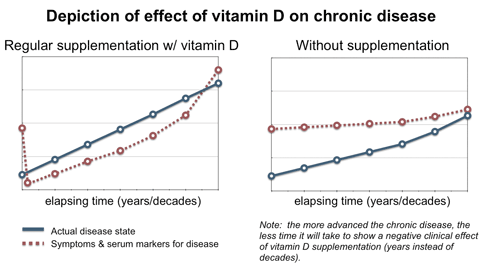
Related articles: Food and drink, Non-MP over-the-counter supplements
The almost inevitable gravitation towards foods and supplements that slow immune activity (and diminish a bacterial die-off reaction) appears to be done subconsciously by people who play host to significant numbers of chronic bacteria. These foods and supplements include:
Marshall Protocol patients are generally advised to avoid supplements and to consume any food in moderation. Additionally, MP patients should try to get any vitamin through whole foods.
The Marshall Protocol (MP) is a curative therapy and represents an alternative to therapies which mask or delay symptoms of disease. The MP aims to target the Th1 PathogensThe community of bacterial pathogens which cause chronic inflammatory disease - one which almost certainly includes multiple species and bacterial forms., which we now believe are ultimately responsible for chronic inflammatory disease.
One cannot judge the success of any therapy in the treatment of chronic illness by symptomatic improvement over the short term.
Greg Blaney, MD