

Home

Science behind vitamin D

A number of studies have suggested that patients with chronic inflammatory diseases are deficient in 25-hydroxyvitamin DThe vitamin D metabolite widely (and erroneously) considered best indicator of vitamin D "deficiency." Inactivates the Vitamin D Nuclear Receptor. Produced by hydroxylation of vitamin D3 in the liver. (25-DThe vitamin D metabolite widely (and erroneously) considered best indicator of vitamin D "deficiency." Inactivates the Vitamin D Nuclear Receptor. Produced by hydroxylation of vitamin D3 in the liver. ) and that consuming greater quantities of vitamin D, which further elevates 25-D levels, alleviates disease symptoms.

Some years ago, molecular biology identified 25-D as a secosteroid. Secosteroids would typically be expected to depress inflammationThe complex biological response of vascular tissues to harmful stimuli such as pathogens or damaged cells. It is a protective attempt by the organism to remove the injurious stimuli as well as initiate the healing process for the tissue., which is in line with the reports of short-term symptomatic improvement. The simplistic first-order mass-action model used to guide the early vitamin studies is now giving way to a more complex description of action.

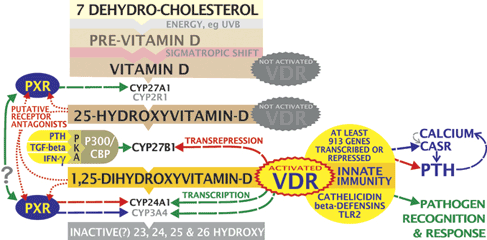
When active, the Vitamin D nuclear receptor (VDRThe Vitamin D Receptor. A nuclear receptor located throughout the body that plays a key role in the innate immune response.) affects transcription of at least 913 genes and impacts processes ranging from calcium metabolism to expression of key antimicrobial peptidesBody’s naturally produced broad-spectrum antibacterials which target pathogens.. Additionally, recent research on the Human Microbiome shows that bacteria are far more pervasive than previously thought, dramatically increasing the possibility that the spectrum of chronic diseases is bacterial in origin.

Emerging molecular evidence suggests that symptomatic improvements among those administered vitamin D is the result of 25-D’s ability to temper bacterial-induced inflammation by slowing VDR activity. While this results in short-term palliation, persistent pathogens that influence disease progression proliferate over the long-term.

Forms and structure of vitamin D

All forms of vitamin D are secosteroids, sharing a close structural and functional resemblance to steroids. The full implications of a “vitamin” acting as a steroid has yet to be fully appreciated by many in the research community. The overlap between steroids and secosteroids is key to understanding the Marshall Pathogenesis. It explains how a “vitamin” can exert short-term palliative effects and long-term harm. Patients on the MP are advised to avoid consuming vitamin D, because of its immunomodulatory effects.

Steps for synthesis of vitamin D

There are a number of vitamin D metabolites in the body. The steps by which one form of vitamin D changes into the next are as follows:

The foundation of the Marshall PathogenesisA description for how chronic inflammatory diseases originate and develop. is “Figure 1,” a graphic which appeared in Trevor Marshall's 2008 Bioessay.

It's important to understand that the body tightly regulates the different forms as it might a steroid.

Molecular activity of vitamin D and the Vitamin D Receptor in chronic disease

A number of studies have suggested that patients with chronic inflammatory diseases are deficient in 25-hydroxyvitamin-DThe vitamin D metabolite widely (and erroneously) considered best indicator of vitamin D "deficiency." Inactivates the Vitamin D Nuclear Receptor. Produced by hydroxylation of vitamin D3 in the liver. (25-D) and that consuming greater quantities of vitamin D, which further elevates 25-D levels, alleviates symptoms of disease. Some years ago, molecular biology identified 25-D as a secosteroid. Secosteroids would typically be expected to depress inflammation, which is in line with the reports of symptomatic improvement. The simplistic first-order mass-action model used to guide the early vitamin studies has given way to a more complex description of action. When active, the Vitamin D nuclear receptor (VDR) affects transcription of at least 913 genes and impacts processes ranging from calcium metabolism to expression of key antimicrobial peptides.

Located in the nucleus of a variety of cells including immune cells, the VDR is a control system of sorts. When exposed to infection and damage, especially that which is caused by pathogens, the body begins to convert the inactive form 25-D into the active form, 1,25-D. As cellular concentrations of 1,25-D increase, 1,25-D activates the VDR, turning on any number of tens of thousands of genes the receptor transcribes. The activation of certain genes leads to the synthesis of antimicrobial peptides. The antimicrobial peptides are the body's “natural antibiotics” and have a potent anti-bacterial effect.

However, bacteria create ligands, which like 25-D, inactivate the VDR and, in turn, the innate immune responseThe body's first line of defense against intracellular and other pathogens. According to the Marshall Pathogenesis the innate immune system becomes disabled as patients develop chronic disease.. This allows the microbes to proliferate. In response, the body increases production of 1,25-D from 25-D, leading to one of the hallmarks of chronic inflammatory disease: a low 25-D and a high 1,25-D.

This pattern is a result of the disease process rather than a cause. For a variety of reasons, neither increased consumption of vitamin D nor the body's synthesis of additional 1,25-D is ultimately effective at combatting infection.

Role in select diseases and conditions

The following articles discuss the role of vitamin D in select diseases. A more complete list of diseases that have been shown to have low level of 25-D is also available.

Osteoporosis

Both osteoporosis and osteopenia are diseases marked by a decrease in bone mineral density. Osteopenia is a less severe form of and sometimes precursor to osteoporosis. The loss of bone mass leads to a porous bone structure, frequent fractures, and delayed healing.

Among doctors, and even many researchers, it is conventional wisdom that vitamin D supplementation reverses osteopenia and osteoporosis. However, a growing body of interventional trials and molecular evidence shows this is not the case. Instead, current research has demonstrated that osteoporosis and osteopenia are often the direct result of infection with the Th1 pathogens, a metagenomic microbiotaThe community of bacterial pathogens including those in an intracellular and biofilm state which cause chronic disease., which produce inflammatory cytokines and inactivate the Vitamin D Receptor. The only way to achieve long-term reversal of bone loss is to kill the Th1 pathogens driving the disease process.

Rickets

Rickets (osteomalacia) is a softening of the bones that leads to fractures and deformity. The majority of cases of rickets occur among children in developing countries who suffer from severe malnutrition. The disease is cited as a primary reason for consuming vitamin D regularly even though research has demonstrated that rickets is not caused by vitamin D deficiency but by hypophosphatemia.

The latest molecular evidence does not support adding high levels of vitamin D to the food chain in the name of “preventing rickets.” The health of the public would be much better served by regulations ensuring that they obtain adequate calcium and phosphorous rather than vitamin D.

Cancer

Main article: Vitamin D and cancer

A variety of studies have suggested that vitamin D protects against cancer. This seemingly intuitive proposition is supported by neither epidemiological nor molecular evidence. In fact, the very opposite is true. This article reviews why this body of research is most likely incorrect – or at the very least, much more complicated than articles in the popular media would have a person believe.

  • Latitude studies - The “latitude studies” are observational, as opposed to interventional, studies, which use ambient solar UV radiation as a proxy for latitude and vitamin D status. For these studies, researchers compare rates of certain major cancers - most notably breast, colorectal and prostate cancer - to rates of sunlight exposure. This group of research has the liability of being wildly inconsistent. The choice to publish research on a specific latitude gradient may be a better proxy for a researcher's bias.
  • Interventional studies - While some randomized controlled trials have suggested that consuming vitamin D reduces rates of cancer, larger and more carefully controlled studies show no such effect.
  • Studies of vitamin D status - Many of the studies examining the relationship between vitamin D status and incidence of cancer argue that low levels of 25-D contribute to cancer. This conclusion has been invalidated by larger well-controlled studies. Although the immune system works to downregulate 25-D (25-hydroxyvitamin D) in inflammatory diseases such as cancer, very high levels of 25-D are a clear indication of regular supplementation. These studies suggest that consuming large amounts of vitamin D predispose a person to increased incidence of cancer.
  • Observational studies – Some case control studies have found that vitamin D intake seems to increase incidence of certain types of cancer.

Cardiac disease

A recent cross-sectional study involving 340 African Americans with type 2 diabetes found that serum 25-hydroxyvitamin D levels were positively associated with increased calcified atherosclerotic plaque in the aorta and carotid arteries.1

Depression and seasonal affective disorder

According to the Marshall Pathogenesis, light-related changes in mood can be attributed to fluctuations in 1,25-dihydroxyvitamin D (1,25-D). Such reactions exist in people who suffer from “seasonal affective disorder” as well as those who are addicted to or dependent upon tanning.

Contrary to popular belief, epidemiological research points to an increase in suicide across countries during the beginning of the summer months when people tend to get more light exposure.

Light exposure does nothing to resolve underlying disease state and can actually delay progress for Marshall Protocol (MP) patients. Certainly prolonged light exposure has been shown to increase skin melanoma – the World Health Organization now categorizes tanning beds under the highest cancer risk category.2

MP patients who have completed the treatment have been able to attest to the fact that sunshine is not necessary for good health or happiness.

Despite what some researchers have argued, latitude studies that try to tie ambient solar UV radiation to prevalence of disease have been inconclusive.

Pregnancy

Related article: Pregnancy and fertility

1,25-D rises by 40% in the early pregnant decidua, meaning that its ability to dysregulate the nuclear receptors and the antimicrobial peptides (AmPs) they express is particularly prevalent during the first trimesters of pregnancy. The subsequent decrease in immune function slows immunopathology, resulting in symptomatic relief. But when the surge in 1,25-D disappears after pregnancy, AmP expression and immunopathology increase once again, leading to exacerbation of disease symptoms. This may explain why some women with autoimmune disease experience periods of palliation during gestation only to become increasingly symptomatic after giving birth.

Fallacies in vitamin D research

Insufficient followup of study subjects

One of the abiding weaknesses of studies on the effects of vitamin D on health is that researchers simply do not follow subjects consuming the secosteroid for a sufficient period of time. Instead, they tend to track subjects over the course of weeks, months, or one or two years, during the period of time when study participants are usually feeling the palliative effects of the steroid. This practice is a mistake as it does not account for the long-term immunosuppressive effects of a steroid.

Failing to control for biases inherent to observational studies

It is arguably impossible to sufficiently control for the socioeconomic factors, which drive a person to participate in a therapy or take a supplement. The case of hormone replacement therapy (HRT) is instructive. For decades, researchers thought that HRT prevented disease, but it was ultimately shown that it caused it.

Studies of vitamin D's efficacy are especially fraught with challenges. For one, the secosteroid is palliative and the negative side effects can only be seen after decades of use. Also, people who take vitamin D are demonstrably different than those who don't. They almost always have a higher socioeconomic status.

Not all studies on vitamin D's efficacy are observational, but those that are may warrant a special amount of skepticism.

Mistaking correlation for causation

Many vitamin D studies suffer from methodological errors including bias inherent to using self-selected subjects and insufficient followup, but perhaps their most egregious liability comes in mistaking correlation for causation.

It's undisputed that a wide array of studies point to the fact that 25-hydroxyvitamin D (25-D) – typically referred to in the media as vitamin D – is low in people with numerous chronic inflammatory diseases. However, these studies fail to prove that low 25-D causes disease.

In fact, molecular science has revealed that the levels of the vitamin D metabolites through a series of intricate and carefully controlled feedback pathways, mechanisms that belie the simplistic first-order mass-action model used to guide the short-sighted vitamin studies. Also, epidemiological evidence suggests that while 25-D is low in chronic disease, 1,25-D (1,25-dihydroxyvitamin D) tends to be very high, an observation which is at odds with the theory that vitamin D deficiency causes or exacerbates disease.

Populations that avoid vitamin D remain healthy despite low levels of 25-D

According to Professor Roger Bouillon of the University of Leuven, “over one billion” people worldwide need to increase their vitamin D intake due to vitamin D “deficiency.”3

Yet, observational studies show that populations which avoid vitamin D consumption have naturally low levels of 25-D and remain healthy with such levels.

  • Healthy Chilean women – A study which tested the level of 25-D in 90 “healthy, ambulatory Chilean women” showed that 27% of the premenopausal and 60% of the postmenopausal women had 25-D levels under 20 ng/ml.4
  • Healthy Bangladeshi women – A study on healthy Bangladeshi women found that approximately 80% of the women had a level of 25-D under 16 ng/ml.5
  • Healthy Chinese infants – In a 1992 study, healthy full-term infants from China had serum concentrations of 25-D ranging from an average of 5 ng/ml to 14 ng/ml.6

One research team, studying patients with xeroderma pigmentosum, a genetic disorder in which patients are unable to repair damage caused by ultraviolet light, found that vitamin D levels are maintained even when patients practice at least six years of rigorous photoprotection and not supplementing with vitamin D. More importantly, the researchers also concluded that the clinical manifestations of vitamin D “deficiency” were absent.

The patients all wore protective clothing and sunscreens when outdoors. Estimated mean vitamin D intake was normal. The mean values of serum 25-OHD were low normal, but 1,25-(OH)2D, calcium, ionized calcium and parathyroid hormone levels were normal [italics added]…. Despite rigorous sun protection normal vitamin D levels can be maintained in ambulatory patients with XP.

Armando Sallitto et al. 7

Even when lactating mothers take all but exceedingly high levels of vitamin D – 6,000 IU which is 15 times the United States' Recommended Daily Intake – the vitamin D content in breast milk remains very low.8 This is confusing for advocates of vitamin D supplementation who would think that breastfeeding mothers would give their infant extra levels of vitamin D during formative stages of growth.

The Vitamin D Council, an organization that advocates vitamin D supplementation, states:

One of the great mysteries in human biology is the fact that most human breast milk is deficient in vitamin D. How could Nature overlook such an important nutrient in the “perfect food”?

Vitamin D Council

Ramifications of a simplistic understanding of vitamin D metabolism

Numerous studies have identified patient populations that are “deficient” in vitamin D. Patients suffering from obesity, schizophrenia, fibromyalgia, multiple sclerosis, autism, etc. all seem to be suffering from vitamin D deficiency. One could list hundreds of such studies.

Although it is not unheard of, few authors seem to explore the possibility that a low 25-D is the result of disease. Perhaps it is because researchers conceptualize vitamin D as they might a resource which gets used up and needs to be replenished – not unlike gasoline when a car runs low. This metaphor is not at all apt, because vitamin D is regulated like the steroid it is.

Large segments of the population are consuming vitamin D at historic levels. Like the first-line treatment for many autoimmuneA condition or disease thought to arise from an overactive immune response of the body against substances and tissues normally present in the body diagnoses, the corticosteroidA first-line treatment for a number of diseases. Corticosteroids work by slowing the innate immune response. This provides some patients with temporary symptom palliation but exacerbates the disease over the long-term by allowing chronic pathogens to proliferate. Prednisone, vitamin D temporarily reduces symptoms of disease, but long-term use dramatically increases the odds of disease relapse.9

In practice, widespread and systematic supplementation of vitamin D serves to drive a kind of self-fulfilling prophesy. When whole populations are given large amounts of vitamin D, the only members of that population who remain “deficient” are those whose immune systems are fighting disease by actively downregulating 25-D. In other words, the more rigorously vitamin D is added to milk, juice, snack bars, and breakfast cereals, the less likely it is that someone has low levels of vitamin D but no chronic disease.

Marshall Protocol and vitamin D

As opposed to certain treatments which employ sunshine or light therapy, patients on the Marshall ProtocolA curative medical treatment for chronic inflammatory disease. Based on the Marshall Pathogenesis. (MP) use the VDR agonistA substance such as olmesartan (Benicar) or 1,25-D which activates the Vitamin D Receptor and transcribes the genes necessary for a proper innate immune response., olmesartanMedication taken regularly by patients on the Marshall Protocol for its ability to activate the Vitamin D Receptor. Also known by the trade name Benicar. , and pulsed, low-dose antibiotics to gradually eliminate the Th1 pathogens. Patients on the treatment must refrain from supplementing with vitamin D or eating any foods that contain vitamin D. These measures allow 25-D levels to drop to a point where the VDR can most optimally activate the innate immune system.

Because the vitamin D metabolites are dysregulated in chronic disease, most patients on the MP also become sensitive to light. Although light sensitivity improves as the Th1 pathogens are killed, most patients must avoid bright sunlight and block bright light in the eyes with special sunglasses during the healing process. However, once the Th1 pathogens have been killed and the vitamin D metabolites have re-stabilized, patients are able to tolerate sunlight and bright lights once again.

Related publications and presentations

Notes and comments

TECHEDIT

The study is the first to show a positive relationship between calcified plaque in large arteries, a measure of atherosclerosis or “hardening of the arteries,” and circulating vitamin D levels in black patients. It appears in the March issue of the Journal of Clinical Endocrinology and Metabolism

References

1) Freedman BI, Wagenknecht LE, Hairston KG, Bowden DW, Carr JJ, Hightower RC, Gordon EJ, Xu J, Langefeld CD, Divers J Vitamin d, adiposity, and calcified atherosclerotic plaque in african-americans. J Clin Endocrinol Metab. 2010;95:1076-83.
2) El Ghissassi F, Baan R, Straif K, Grosse Y, Secretan B, Bouvard V, Benbrahim-Tallaa L, Guha N, Freeman C, Galichet L, Cogliano V A review of human carcinogens--part D: radiation. Lancet Oncol. 2009;10:751-2.
3) Boullion, R. (2006 April 2). Vitamin D analogues: pharmacology and therapeutic uses. European Congress of Endocrinology, Glasgow.
4) González G, Alvarado JN, Rojas A, Navarrete C, Velásquez CG, Arteaga E High prevalence of vitamin D deficiency in Chilean healthy postmenopausal women with normal sun exposure: additional evidence for a worldwide concern. Menopause. 2007;14:455-61.
5) Islam MZ, Akhtaruzzaman M, Lamberg-Allardt C Hypovitaminosis D is common in both veiled and nonveiled Bangladeshi women. Asia Pac J Clin Nutr. 2006;15:81-7.
6) Specker BL, Ho ML, Oestreich A, Yin TA, Shui QM, Chen XC, Tsang RC Prospective study of vitamin D supplementation and rickets in China. J Pediatr. 1992;120:733-9.
8) Wagner CL, Hulsey TC, Fanning D, Ebeling M, Hollis BW High-dose vitamin D3 supplementation in a cohort of breastfeeding mothers and their infants: a 6-month follow-up pilot study. Breastfeed Med. 2006;1:59-70.
9) Gottlieb JE, Israel HL, Steiner RM, Triolo J, Patrick H Outcome in sarcoidosis. The relationship of relapse to corticosteroid therapy. Chest. 1997;111:623-31.
Last modified: 06.05.2010
© 2010, Autoimmunity Research Foundation. All Rights Reserved.